




Running paid ads is a bit like renting an apartment. The moment you stop paying, you are out. SEO, on the other hand, is more like buying property; it takes time and effort upfront, but over the years, it builds into something that works for you even when you are not actively pushing it.
For businesses across India investing in digital growth, this distinction matters a lot. Paid advertising delivers results quickly, but those results stop the moment the budget runs dry. SEO takes longer to show results, but once it does, it quietly reduces how much you need to spend on ads to stay visible. That shift, from renting visibility to owning it, is what this blog is about.
1. Paid Ads Fill the Gap. SEO Closes It.
There is nothing wrong with running paid ads, especially in the early stages when your website has no organic presence. Google Ads and Meta campaigns can put you in front of the right audience immediately, and that has real value.
But here is the problem most businesses eventually run into: ad costs go up. Competition increases, click costs rise, and the return on every rupee spent starts to shrink. Without an organic foundation, you are permanently dependent on that spend, and that is a fragile position to be in.
SEO builds the organic foundation that makes paid ads optional rather than mandatory. When your website starts ranking for high-intent keywords on its own, you can either reduce your ad spend or redirect it toward newer, more competitive terms, instead of just keeping the lights on.
2. Organic Traffic Has No Cost Per Click
Every visitor who finds you through a Google search costs you nothing at the point of contact. No bid, no click fee, no daily budget to monitor. Once your pages rank, they can drive traffic consistently, whether you are in a meeting, asleep, or on holiday.
Compare that to paid ads, where every single click has a price tag. For competitive industries in cities like Mumbai, that price can be significant. Businesses running Google Ads for keywords like ‘SEO services in India’ or ‘digital marketing company Mumbai’ are often paying hundreds of rupees per click.
When SEO starts doing the heavy lifting for those same keywords organically, the maths changes completely. You are getting the same (or better) quality traffic without the ongoing cost.
3. SEO Improves the Performance of Your Paid Ads Too
This is something not enough businesses talk about. SEO and paid advertising are not separate strategies; they feed each other.
Google uses a Quality Score to determine how much you pay per click and where your ad appears. One of the key factors in Quality Score is your landing page experience, how relevant, fast, and useful your page is to someone who clicks the ad. When you invest in SEO, you are improving exactly those things: page speed, content quality, structure, and relevance.
The result? Better Quality Scores, lower cost-per-click, and better ad placements, even without increasing your budget. SEO investment, in effect, makes your ad spend go further.
4. Trust Is Built Organically, Not Bought
Most people know, even if subconsciously, that organic results are earned while ads are paid for. Studies consistently show that users trust organic results more, click on them more, and convert at higher rates for certain types of searches.
When your website ranks organically for terms your potential customers are searching for, it signals credibility. That credibility compounds over time; better rankings lead to more clicks, more clicks lead to stronger engagement signals, and stronger signals lead to even better rankings.
Ads can buy attention. SEO earns trust. Both matter, but only one of them keeps working after you stop spending.
5. The Earlier You Start, the Lower the Long-Term Cost
SEO is not a quick fix, and that is precisely why starting early makes such a big difference. The businesses that dominate organic search in competitive markets did not get there overnight. They started building content, earning backlinks, and optimising their websites months or years before their competitors thought to.
Every month you delay is a month of compounding growth you do not get back. And every month you rely entirely on paid ads is a month of spend that builds no lasting equity.
- Starting SEO in month one means organic traffic starts flowing before ad costs become unsustainable
- Early content investment ranks faster as your domain authority grows
- Competitors who start later will take longer to catch up, giving you a durable advantage
The SEO Cost-Reduction Timeline: What to Expect and When?
One reason businesses hesitate to invest in SEO is that the timeline feels vague. So here is an honest, realistic picture of how SEO typically reduces dependence on paid ads, broken down by phase.
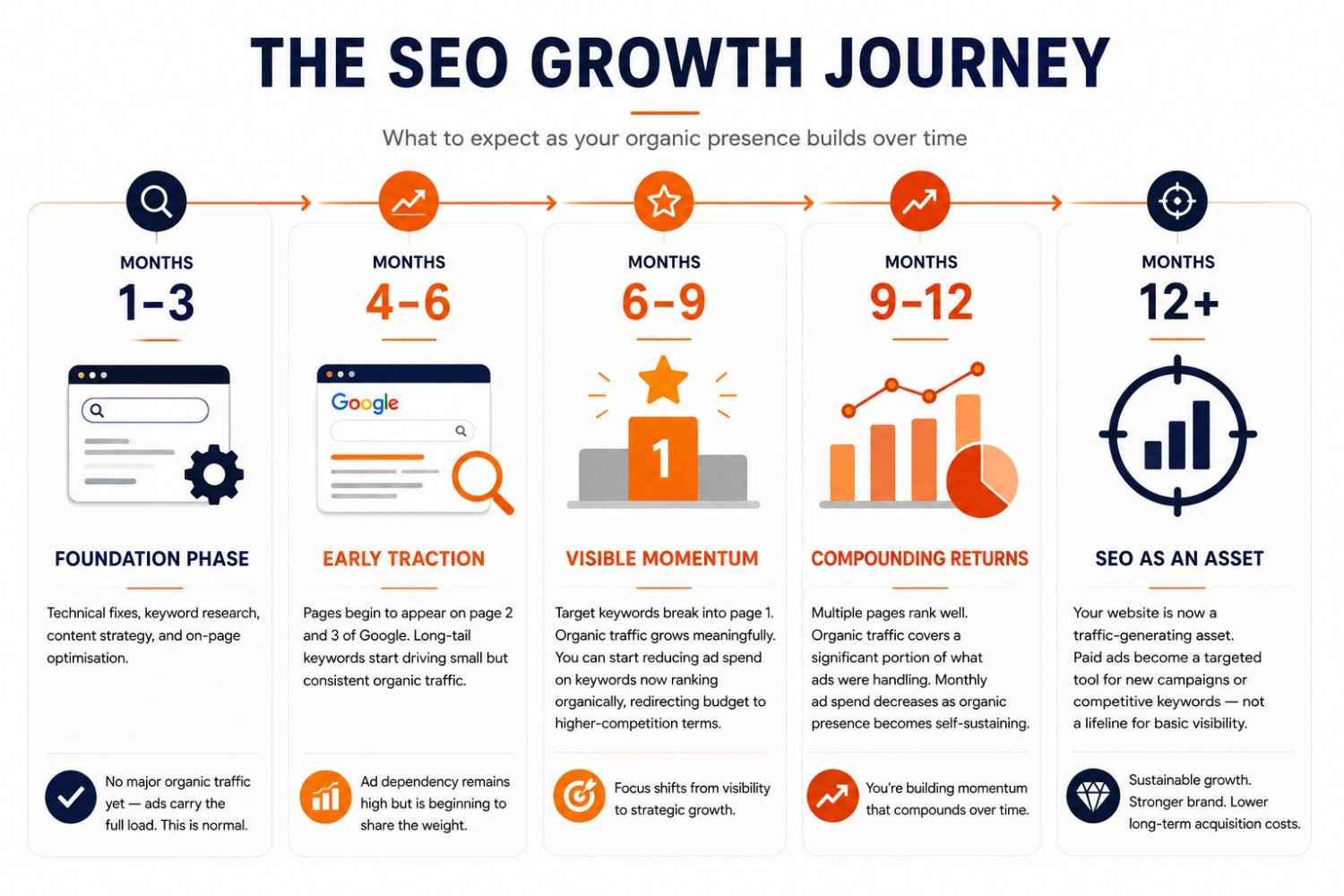
The exact timeline varies depending on your industry, competition, and how aggressively you invest in SEO. But the direction is consistent: early investment leads to declining dependence on paid advertising.
So, Is SEO Worth It?
For any business that plans to be around in two, three, or five years – yes, almost always. The question is not whether SEO will pay off. It is whether you start building that foundation now or give your competitors more time to pull ahead.
Paid ads will always have a place in a smart digital strategy. But using them as a substitute for SEO, rather than a complement to it, is an expensive long-term choice.
Thinking about where SEO fits in your current strategy?
A lot of businesses we speak with are already running ads and wondering whether SEO makes sense alongside them or instead of them. The honest answer depends on your goals, your timeline, and where you are right now.
If you would like a straightforward conversation about that, the team at MIAAKA Tech is easy to reach.